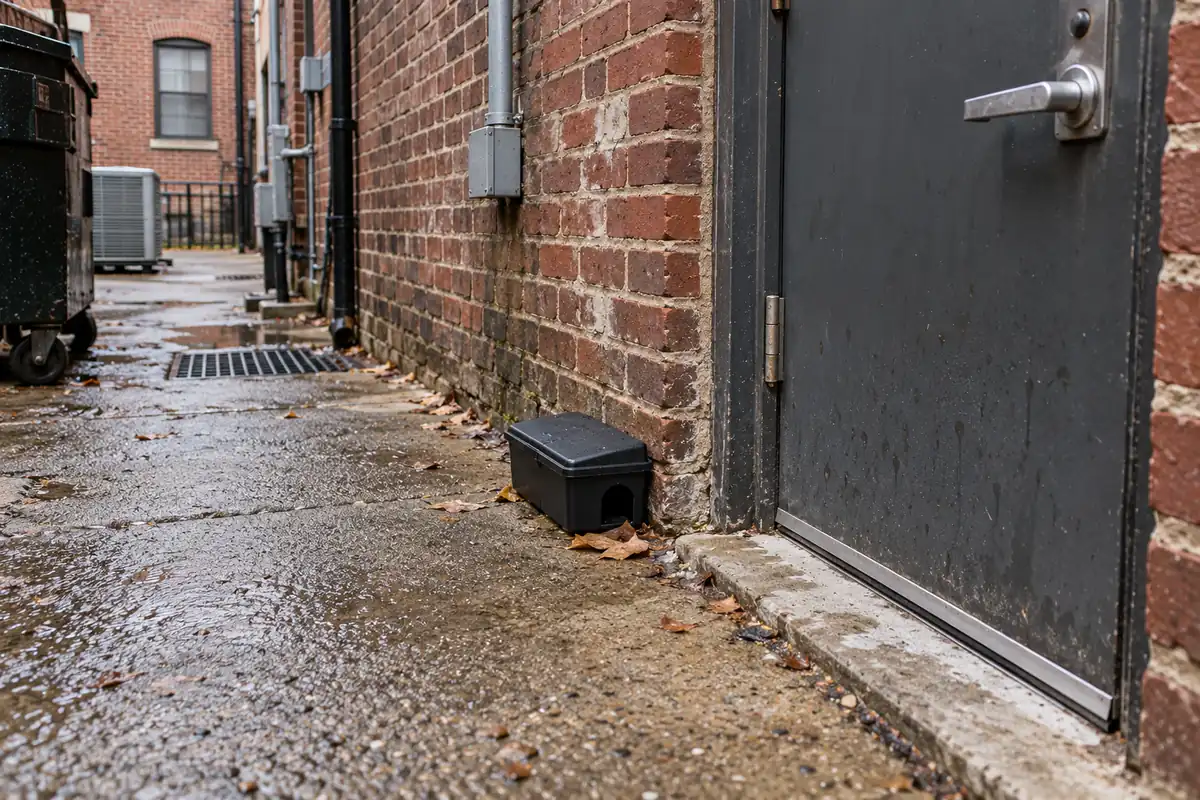
Rodent control in La Crosse, WI
Rodent control in La Crosse, WI is shaped by the river, the cold and the age of the houses.
Once the first hard frost arrives, mice and rats start testing the foundations of homes on the North Side, the South Side and out along the bluffs, and they keep at it until spring.
Most people first notice a chewed cereal box, droppings behind the stove, a scrabbling sound over the bedroom ceiling or a dark, greasy smear along a cellar wall.
Take a photograph, and jot down the room and the hour.
The visit should end with a name for the animal, a route it uses to get in and a clear view of where it is living: cellar, wall cavity or attic.
It also helps to ask early which jobs are part of the pest visit and which, such as mortar repair or roofing, would be done by a different trade.
Your next step after calling
A check of your street address comes first. Then we phone to book a visit that suits you.
What rodent problems look like in La Crosse
La Crosse sits on low ground between the Mississippi and the bluffs, and the soil stays damp for much of the year.
Rodents live along the river bottoms and the marsh, and the nearest old houses and outbuildings are the first places they try.
Older homes here are brick or frame, sitting on stone or block, with cellars, attached porches and a chimney or two.
Mortar powders over the decades, sills soften and the holes where pipes pass through the wall are rarely sealed well.
The winters are long. From October on, more mice and rats come in, and they stay in the walls until the thaw.
The rodents La Crosse homeowners meet
Most calls in La Crosse County involve one of three animals, and each one points the inspection in a different direction.
- House mouse: a small, grey-brown animal that sets up in kitchens, wall cavities and storage boxes, and keeps breeding through winter. It needs only a crack the width of a pencil.
- Deer mouse: pale underneath, at home in garages, sheds and cabins near the bluffs and woods. It can carry hantavirus, so droppings should never be swept dry.
- Norway rat: a thick-bodied digger that lives beside foundations, under concrete and near the riverbank and storm drains.
- Near Onalaska, rodents turn up at the attic hatch before they turn up in the main rooms.
What a rodent inspection in a La Crosse home covers
In an older house the visit tends to begin on the outside and finish in the attic.
- Stone or block foundation walls, and every spot where a gas, water, power or cable line comes through.
- Cellar windows, window wells and the wooden sill resting on the foundation.
- The cellar floor: drains, the water heater closet, shelves and stacked boxes.
- Cupboards and the gaps behind the stove and refrigerator, where mice leave their droppings.
- Attic insulation, rafters and wiring, for tunnels, nests and chewed cable.
- The yard and outbuildings: sheds, woodpiles, compost and bird feeders.
What to look for near the North Side
The work follows a simple order. Take out the animals, shut the doors they used, then clean up what they left. Reversing it can leave animals sealed inside.
- Traps set in the runs found during the inspection, and revisited on a fixed timetable.
- Locked bait stations outdoors, used only where bait is suitable and children and pets cannot reach it.
- Gaps closed with metal mesh, patching cement, flashing and new door sweeps, because rodents chew through foam and plastic.
- Droppings and fouled insulation removed with gloves and a respirator, then the area disinfected.
- A return visit to see what the traps caught and whether anything new has opened up.
Get the method, the areas covered and the dates of any return visits written down.
Why rodents come back to La Crosse houses
- The animals were trapped but the hole they used stayed open.
- The gaps were sealed while something was still alive inside the wall.
- Dry droppings were swept up, throwing dust into the air.
- Bird seed, pet kibble and cardboard boxes were left on the garage floor.
- The shed or garage next door was never checked, though the same animals were living there.
Rodents through the year in La Crosse
Calls begin to rise in October and peak from November to January, as mice and rats look for a winter home in cellars, garages and attics.
They breed indoors all winter, so the scratching overhead and the nibbled pantry food get worse until the ground thaws.
Late summer is the best time to seal a building. The weather is dry, there are fewer droppings to deal with and the work is done before the next cold snap.
Rodents and flood-prone yards near the river
Houses close to the Black River, the La Crosse River marsh and the Mississippi see animals pushed out of burrows when the water climbs.
After a flood or a long wet spell, expect more activity at doors and along foundations.
Stack firewood well away from the house, keep seed in metal bins and check foundation vents after any high water.
If a cellar floods, dry it out quickly. A damp, cluttered cellar is an open invitation to rodents.
Your questions about rodents.
Short answers, written for La Crosse.
How can I tell mice from rats in my La Crosse house?
Mouse droppings look like grains of rice, and rat droppings are bigger and blunt-ended. Rats also leave greasy rub marks along walls and dig burrows beside foundations.
A professional can confirm which one you have from the evidence in the house.
Why do mice move into La Crosse homes each autumn?
As nights get colder they look for warmth, food and a dry nest. A crack the width of a pencil is enough to let a mouse in.
What is the safe way to clear mouse droppings?
Open a window, wear gloves and a mask, dampen the droppings with disinfectant and wipe them away. Do not sweep or vacuum them dry. Leave a heavily fouled attic to a professional.
If the animals are trapped, why seal the building too?
Without sealing, the same route stays open and the next animals use it. Closing the gaps is what keeps the problem from coming back.
Do rats live near the Mississippi and the marsh?
Yes. Norway rats burrow along banks, under concrete and beside foundations, and they head for buildings when the water rises.
Will poison alone clear a rodent problem?
Seldom. Poisoned animals can die inside walls and ceilings. Bait is better kept in locked stations as a supporting step, with trapping and sealing doing the main work.
How soon should the noises overhead stop?
Usually within a week or two of trapping. If you still hear scratching after that, tell our technician, because there may be a second way in.
What is the best season to seal up a La Crosse house?
Late summer and early autumn, before the first frost. The weather is dry and the gaps can be closed before the animals look for winter shelter.
What to look for near Holmen
Ready to ask about
rodent control?
For rodents in La Crosse, the visit starts at the weep holes and then follows whatever that shows.
Back to homeCoverage for rodent control in La Crosse is confirmed from the street, including places such as Holmen. The details are on the Exterminator nearby in La Crosse, WI page.